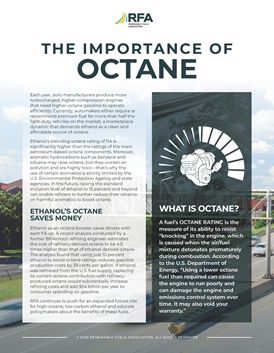
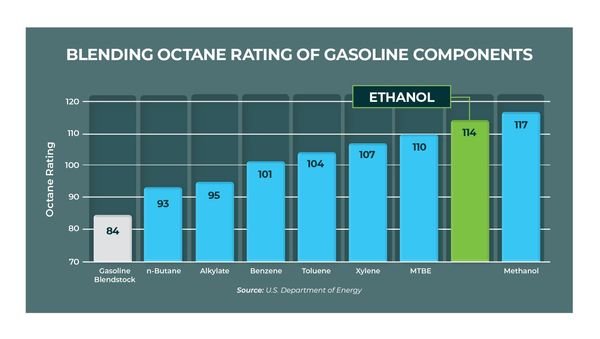
Automakers and consumers alike continue to demand higher octane fuels. Each year, auto manufacturers produce more turbocharged, higher-compression engines that need higher-octane gasoline to operate efficiently. Ethanol's blending octane rating of 114 is significantly higher than the ratings of the main petroleum-based octane components. Moreover, aromatic hydrocarbons such as benzene and toluene may raise octane, but they worsen air pollution and are highly toxic, which is why the use of certain aromatics is strictly limited by the U.S. EPA.
Refiners have largely optimized their processes to take advantage of ethanol's properties. Today, most regular gasoline in the U.S. is produced using blendstock with an octane rating of 84, which is then upgraded to a rating of 87 by adding 10% ethanol. In the future, refiners may continue to reduce the octane rating of gasoline blendstocks as E15 becomes more ubiquitous. This allows refiners to reduce crude oil imports and increase the throughput of hydrocarbon blendstock at a lower cost.
Demand for octane is expected to continue to grow, driven by advanced vehicle engines, tighter gasoline specifications and sulfur limits, and the expansion of E15. Octane demand could be propelled further by policies that compel the use of mid-level ethanol blends such as E25 and E30 to meet future fuel economy and emissions standards. RFA continues to push for an expanded future role for high-octane, low-carbon ethanol and we continue our work with policymakers to highlight the benefits of such fuels - especially as ethanol moves toward net-zero emissions.
While the RFS has created a durable policy foundation for reducing GHG emissions from the transport sector, complementary policies could deepen and accelerate the decarbonization of our nation’s transportation fuels. The following options would be most effective in the near- and mid-term:
- Adoption of the Next Generation Fuels Act, which requires a rapid but orderly nationwide transition to more efficient (higher octane), lower-carbon liquid fuels for combustion engines and offers other regulatory enhancements.
- Adoption of a national Clean Fuel Policy or Low Carbon Fuel Standard requiring annual reductions in the average carbon intensity of U.S. transportation fuels. Ensure the program is informed by the best available science and is truly fuel- and vehicle-neutral. Include incentives for farmers who grow bioenergy feedstocks using carbon-efficient practices.