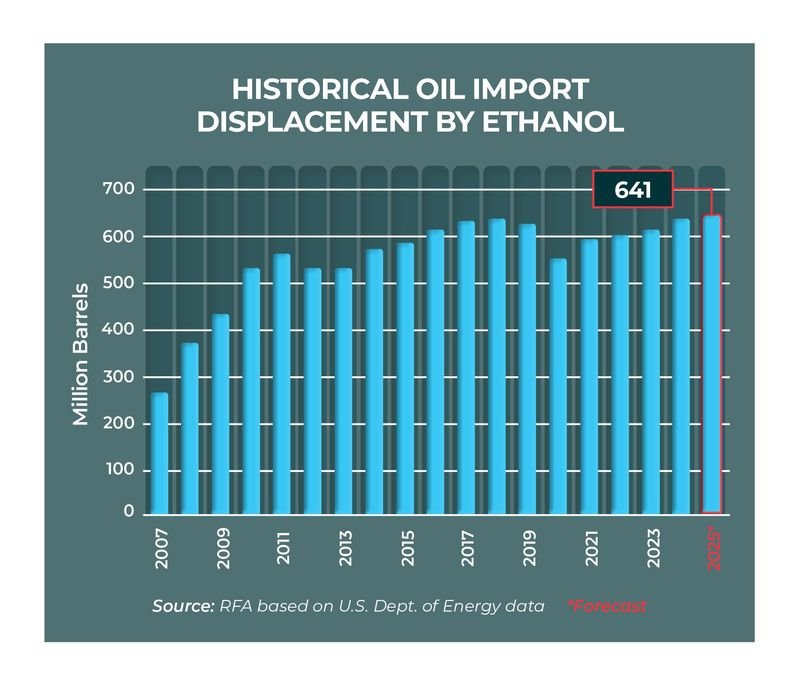
More than 99 percent of the ethanol consumed in the U.S. is produced domestically, as is the grain used to produce it. American-made ethanol significantly contributes to U.S. energy security. In fact, U.S.-produced ethanol displaced the need for more than 640 million barrels of imported oil in 2025 alone. The U.S. continued to import nearly 200 million barrels of crude oil per month in 2025. Imports accounted for one-third of the U.S. oil supply and nearly 40% of inputs to U.S. refineries.
Even though U.S. oil production has increased in recent years, our nation’s economy still transfers billions of dollars every year to the OPEC cartel.
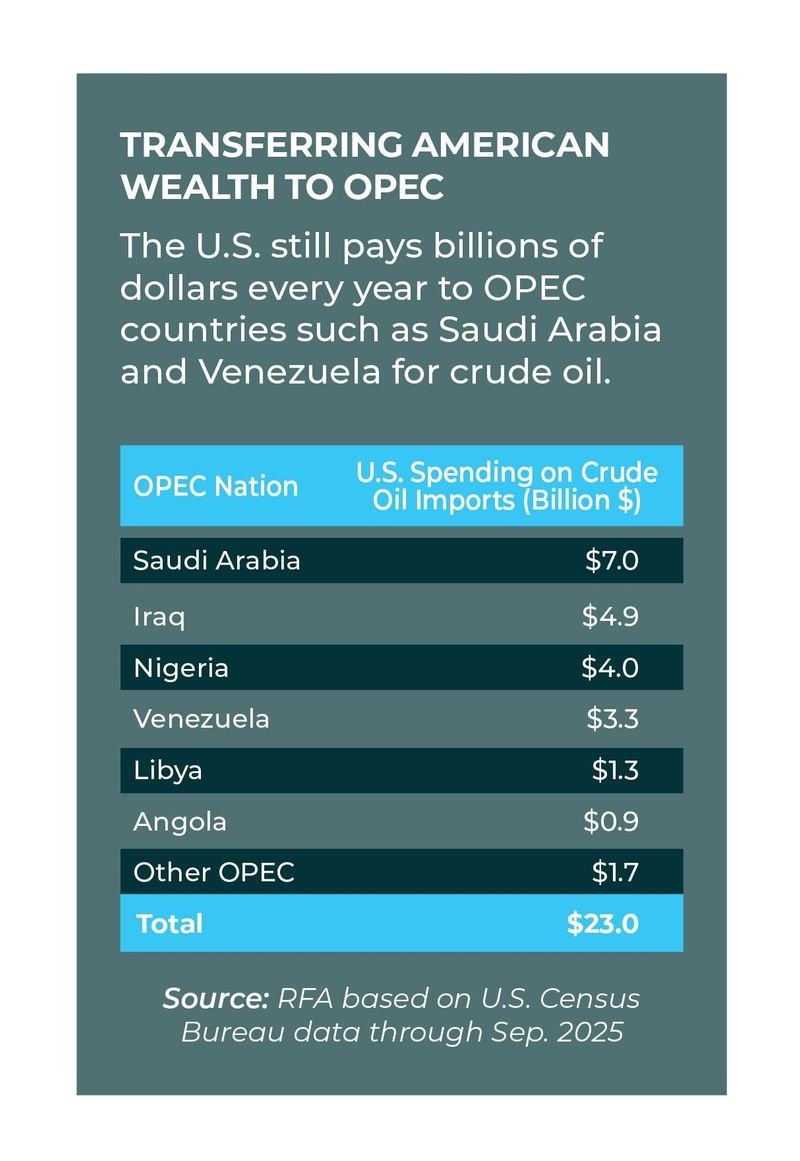
An “oil import premium” exists, although it is not reflected in gasoline prices paid by consumers at the pump.
Oil-related defense expenditures, including the cost of maintaining the Strategic Petroleum Reserve. The U.S. Department of Transportation and U.S. Environmental Protection Agency estimate the additional cost of protecting the supply and transit of foreign crude oil is in the range of $5-$22/barrel.1
Macroeconomic effects of oil supply disruptions and price shocks. Geopolitical tensions, conflict in the Middle East, strategic production shifts on the part of OPEC, and natural disasters can cause oil supply shocks that affect GDP. Higher oil prices push up nominal consumption expenditures by increasing the price of fuel and general inflation; require a higher investment in domestic oil exploration and development; and negatively affect international trade.2
Higher U.S. petroleum product prices due to upward pressure on world oil prices driven by the U.S. market power (“monopsony”) in world petroleum consumption.
Subsidies and Tax Incentives. The U.S. Energy Information Agency reports that subsidies and support for the U.S. crude oil industry in FY2016 totaled $18.8 billion, a massive 63 percent increase from FY2010.3
1 Valuation of Energy Security for the United States (2017) and Externalities of Transportation Fuels: Assessing Trade-offs Between Petroleum and Alternatives (2013).
2 Oil Supply Shocks, US Gross Domestic Product, and the Oil Security Premium (2017)
3 Direct Federal Financial Interventions and Subsidies in Energy in Fiscal Year 2016 (2018)