Sophisticated grain ethanol production facilities have been utilizing engineering and design enhancements, new process technologies, automation upgrades, and other advances to make remarkable gains in efficiency to extract more out of each bushel of corn.
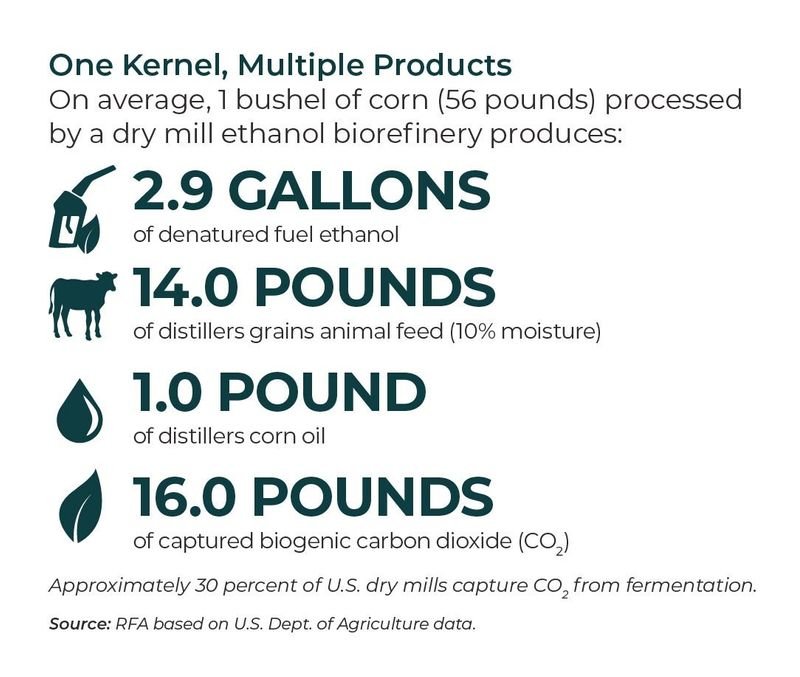
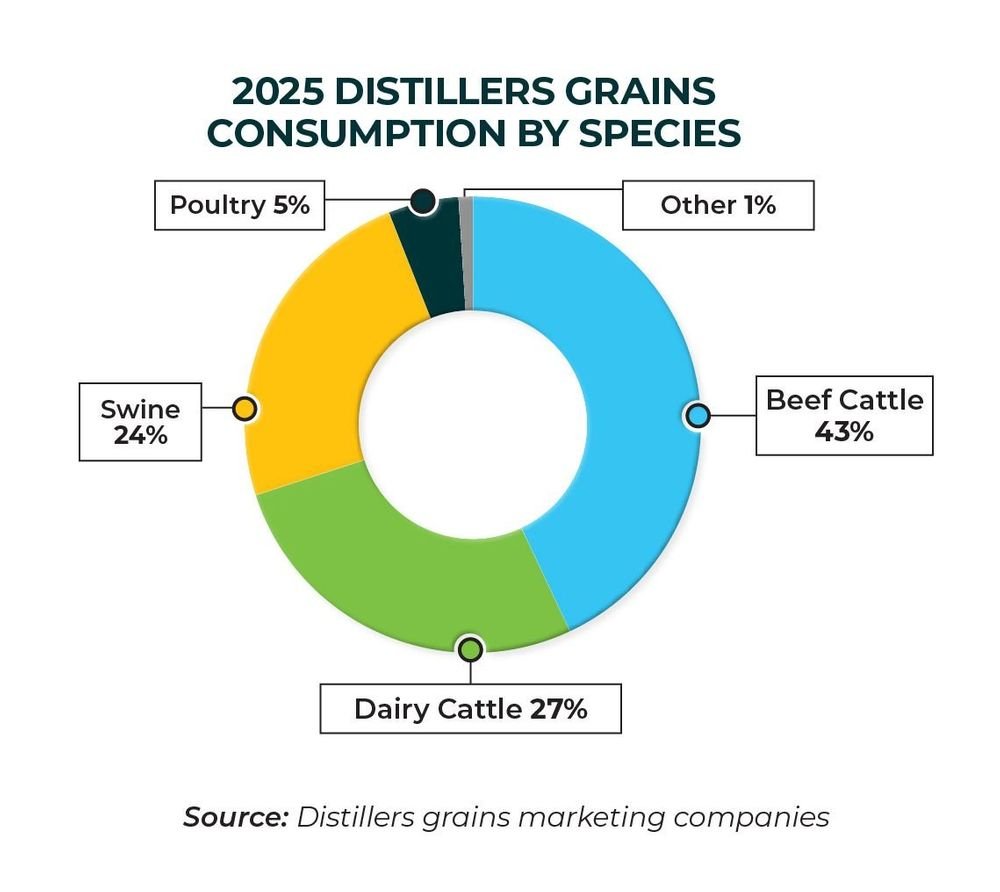
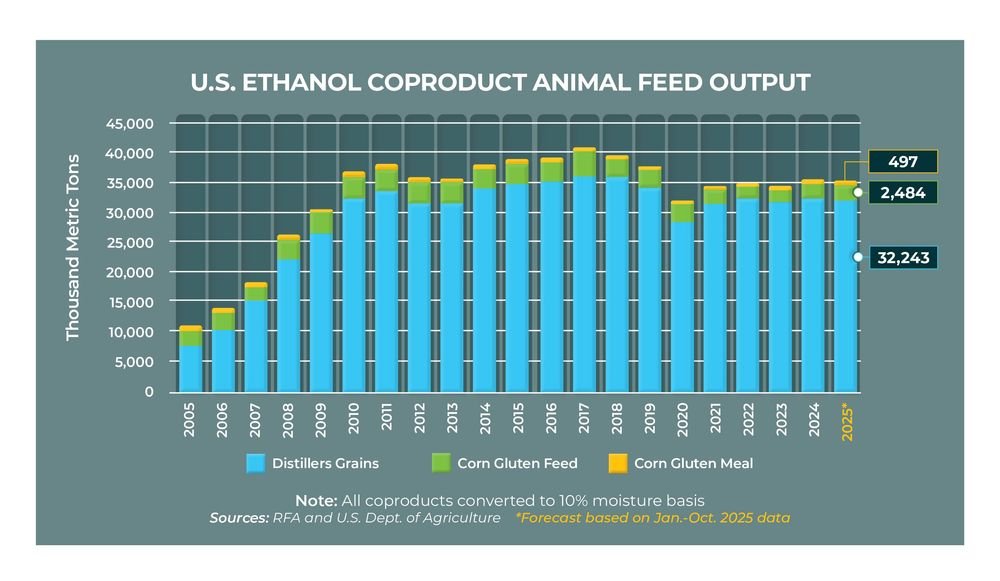
U.S. ethanol biorefiners produce distillers grains, gluten feed and gluten meal. These bio-products are valuable corn and soybean meal substitutes in rations used around the world to feed livestock (beef and dairy cattle and swine), poultry, and the aquaculture sector. In addition, ethanol plants extract distillers corn oil, which is experiencing growing demand as a key feedstock for renewable diesel, biodiesel and sustainable aviation fuel, as well as for poultry feed.
Now fully under the regulatory oversight of the U.S. Food & Drug Administration, ethanol plants are required to comply with preventive controls requirements as mandated by the Food Safety Modernization Act (FSMA). This federal rule requires covered facilities to follow current good manufacturing practices for animal food production and have a written food safety plan that includes an analysis of hazards and risk-based controls. These preventive controls provide a formal assurance to buyers around the world that American ethanol co-products continue to be safe feed ingredients.
A record 3 million tons of high-purity biogenic carbon dioxide (CO₂) was captured in 2025. It is used for everything from beverage carbonization and meat processing to wastewater treatment and dry ice production. In 2021, RFA's member producers unanimously pledged to produce ethanol with net-zero carbon emissions, on average, by 2050 or sooner. Lowering carbon emissions can be achieved with workable improvements both on the farm and at the biorefinery, especially with renewable energy use and carbon capture and sequestration.
Ethanol Co-Products Data
Use The Form Below to Start Your Download
Lorem ipsum dolor sit amet, consectetur adipiscing elit. Suspendisse varius enim in eros elementum tristique. Duis cursus, mi quis viverra ornare. Lorem ipsum dolor sit amet, consectetur adipiscing elit. Suspendisse varius enim in eros elementum tristique. Duis cursus, mi quis viverra ornare
Related RFA Publications
Resources & Helpful Links
RFA/NCGA/AFIA: Distillers Grains Testing Guidelines ISU: Mycotoxins in the Grain Market USGBC: DDGS User Handbook USGBC: Best Management Practices to Avoid Pest Contamination of DDGS RFA: Co-Products Reports and Studies American Feed Industry Association (AFIA) Association of American Feed Control Officials (AAFCO) FDA: FSMA Technical Assistance Network (TAN) FDA: Center for Veterinary Medicine (CVM) Food Safety Preventive Controls Alliance (FSPCA) Distillers Technology Council (DTC) National Grain and Feed Association (NGFA) U.S. Grains & BioProducts Council (USGBC) USDA-AMS: Federal Grain Inspection Service (FGIS)